Keep Ants Out of Your Home With These Prevention Tips
You walk into the kitchen, reach for your morning coffee, and notice a line of ants moving across the countertop. A few ants may seem harmless, but they can quickly become a frustrating problem when they continue appearing around food, sinks, and other areas of your home.
Ants are among the most common household pests in Northwest Indiana and the Chicagoland area. They enter homes searching for food, water, and shelter, often slipping through openings that homeowners barely notice.
Weather can also influence ant activity. Heavy rainfall may disrupt outdoor nesting areas, while dry conditions can encourage ants to search for reliable moisture sources. Regardless of the season, your home can become an attractive destination when the right conditions exist.
Fortunately, there are several practical ways to keep ants out and reduce the likelihood of recurring infestations.
Why Do Ants Enter Your Home?
Ants are social insects that live in colonies. Worker ants leave their nests to search for food and water, sometimes traveling considerable distances.
When they discover a reliable food source, they can establish trails that guide other ants to the same location.
Common reasons ants enter homes include:
- Accessible food crumbs and spills.
- Unsealed pantry products.
- Moisture around sinks and plumbing.
- Small openings around windows and doors.
- Outdoor nesting areas near the foundation.
- Changes in weather that affect their normal environment.
Understanding what attracts ants is the first step toward effective prevention.
1. Remove Food Sources That Attract Ants
One of the easiest ways to discourage ants is to eliminate access to food.
Different ant species have different food preferences. Some are attracted to sugary substances, while others seek proteins, grease, or other food materials.
Even small amounts of residue can attract foraging ants.
Keep Your Kitchen Clean and Organized
Pay particular attention to areas where food is prepared, stored, and consumed.
Helpful cleaning habits include:
- Wipe countertops after preparing meals.
- Sweep and mop floors regularly.
- Clean crumbs beneath appliances.
- Wash dishes instead of leaving them overnight.
- Store sugar, cereal, flour, and other pantry items in sealed containers.
- Keep garbage cans covered and empty them frequently.
- Clean up spilled pet food and avoid leaving it out overnight.
Remember to inspect less obvious areas, including pantry shelves and the spaces behind appliances.
Keeping food properly stored does not guarantee that ants will disappear, but it removes one of their biggest reasons for entering your home.
2. Identify and Clean Ant Trails
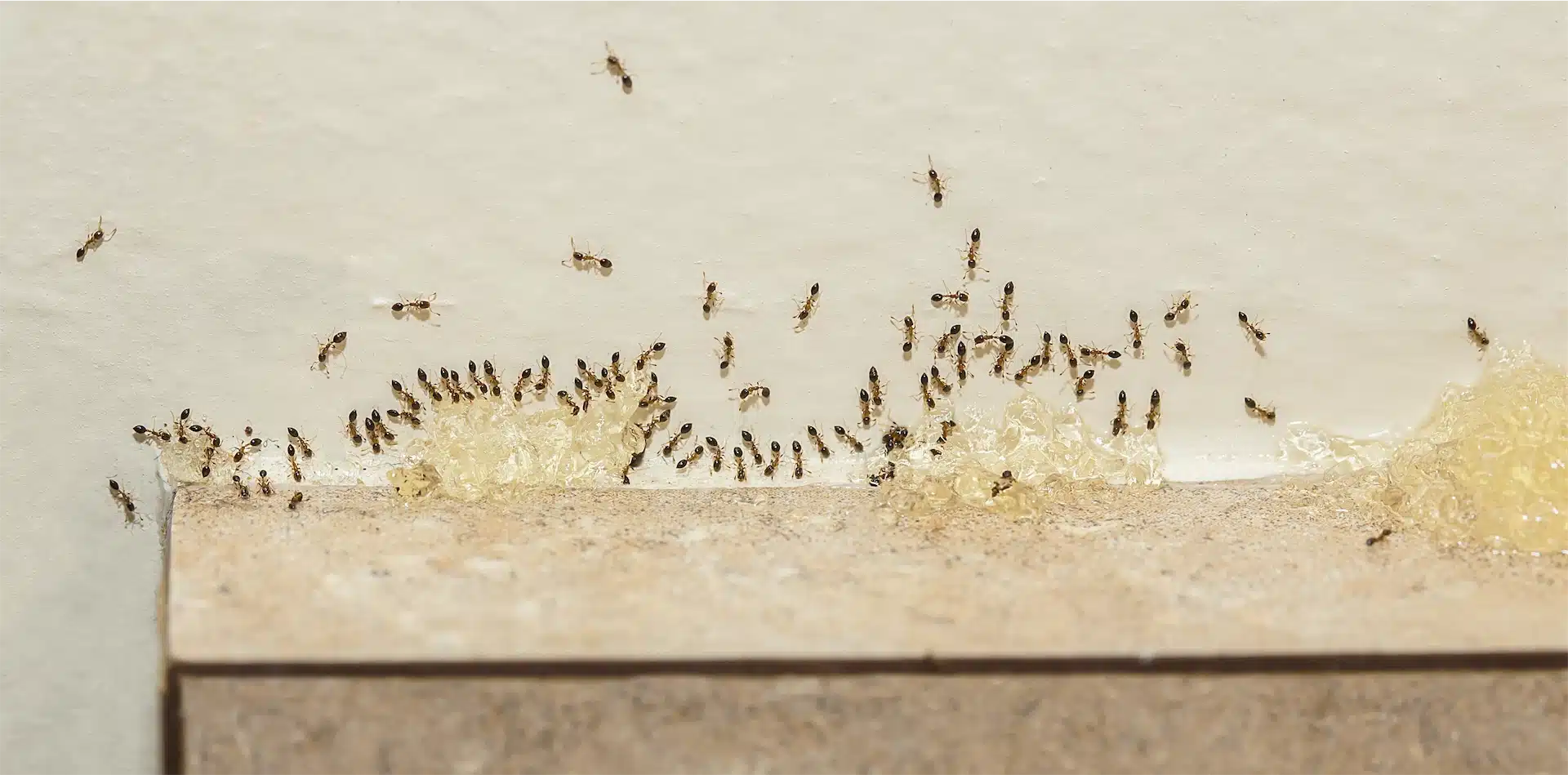
Have you noticed ants traveling in a line across your kitchen counter or along a wall?
This organized movement happens because many ants communicate through chemical signals called pheromones.
When a worker ant locates food, it may leave a scent trail that helps other ants follow the same route.
Why Cleaning Ant Trails Matters
Simply removing the ants you can see may not stop others from following the remaining chemical trail.
If you notice a trail, first observe where the ants are entering and where they are traveling. This information can help you identify a possible access point.
You can then clean the affected surface with an appropriate household cleaner or mild soapy water.
However, wiping away a trail does not necessarily eliminate the colony.
If ant bait is being used, follow its instructions and avoid spraying insecticides near the bait. Spraying can interfere with the ants’ ability to carry bait back to the nest.
3. Seal Cracks and Gaps Around Your Home
Ants can enter through very small openings, including cracks around foundations, gaps near windows, and spaces where utility lines pass through exterior walls.
Sealing these access points can make it more difficult for ants to enter.
Check Common Entry Points
Walk around your home’s exterior and look closely at:
- Gaps around doors and windows.
- Cracks near the foundation.
- Openings around plumbing connections.
- Spaces where electrical cables enter walls.
- Damaged weatherstripping.
- Openings around siding and exterior trim.
Use suitable caulk or other appropriate materials to close accessible gaps.
Repair damaged screens and replace worn door seals when needed.
Because ants are small and can use multiple routes, sealing may not stop every ant. However, it remains an important part of a broader prevention strategy.
4. Reduce Moisture and Maintain Your Landscaping
Food is not the only reason ants enter homes.
Water and favorable nesting conditions can also attract them, particularly during periods of extreme weather.
Fix Moisture Problems Indoors
Check areas where water may accumulate, including:
- Under kitchen and bathroom sinks.
- Around leaking pipes.
- Near dishwashers and washing machines.
- Inside damp basements.
- Around poorly sealed windows.
Repair leaks promptly, dry wet surfaces, and address ongoing moisture problems.
These actions may also help discourage other household pests that prefer damp conditions.
Keep Outdoor Nesting Areas Under Control
Your landscaping can influence how easily ants approach your home.
Trim shrubs and branches that touch exterior walls, and remove unnecessary debris near the foundation.
Avoid storing firewood directly against the house. Keep mulch beds maintained and address areas where water remains trapped.
Outdoor ant colonies are not always a problem. However, reducing favorable conditions immediately around your home can help limit opportunities for ants to enter.
What Should You Do if Ants Keep Coming Back?
Sometimes, even careful cleaning and preventive maintenance are not enough.
You may eliminate the ants you can see, only to discover another trail a few days later.
This can happen because the colony remains active and continues sending workers to search for resources.
Professional Ant Control Addresses More Than Visible Activity
Different ant species have different nesting behaviors and treatment needs.
For example, pavement ants may establish colonies beneath concrete surfaces, while carpenter ants can create nesting galleries inside wood.
Correct identification matters because an effective treatment for one species may not work for another.
Depending on the situation, ant management may involve:
- Identifying the ant species.
- Inspecting areas with repeated activity.
- Locating potential entry points and nesting areas.
- Recommending sanitation and moisture control improvements.
- Applying appropriate treatments when necessary.
- Monitoring for continuing activity.
Targeted treatment, proper identification, and preventive maintenance can work together to improve long term ant management.
Frequently Asked Questions
Why Are Ants Suddenly Appearing in My Kitchen?
Ants often enter kitchens because they have discovered food, water, or both. Crumbs, sugary spills, unsealed pantry products, and moisture around sinks can attract foraging workers. Cleaning these areas, properly storing food, and identifying entry points can help reduce activity.
Can Heavy Rain Cause Ants to Enter Your House?
Yes. Heavy rainfall can flood or disturb some outdoor ant nests, encouraging workers to search for drier locations. Homes may provide temporary shelter or access to food. However, ants can also enter during dry weather when they are searching for moisture, so prevention is important throughout the year.
Does Seeing Ants Indoors Mean There Is a Nest in the House?
Not necessarily. Many ants enter homes from colonies located outside. A few foraging ants do not automatically indicate an indoor nest. However, repeated sightings, large numbers of ants, or activity originating from walls and other concealed spaces may warrant further investigation.
Should You Spray Ants or Use Ant Bait?
The appropriate treatment depends on the ant species and the infestation. Ant baits can allow workers to carry active ingredients back to a colony, while sprays may only affect visible ants. Avoid spraying insecticides around bait placements because this can interfere with bait effectiveness. Always follow product labels and safety instructions.
When Should You Contact a Professional for Ant Control?
Consider professional ant control when ants repeatedly return, appear in multiple rooms, or remain active despite cleaning and sealing entry points. Professional assistance is also recommended when you suspect carpenter ants or cannot identify the species or nesting location. An inspection can help determine the source of the activity and appropriate treatment options.
Keep Ants Out With Help From Rapid Pest Solutions
Keeping ants out of your home starts with practical prevention.
Clean up food sources, remove scent trails, seal potential entry points, and address moisture problems that may attract ants.
These habits can make your property less inviting, but established colonies sometimes require professional attention.
Rapid Pest Solutions provides residential and commercial pest control services throughout Northwest Indiana and the Chicagoland area. Our team can evaluate recurring ant activity and recommend solutions based on your property’s needs.
Tired of finding ants in your kitchen, bathroom, or other living spaces? Contact Rapid Pest Solutions or call 219 836 5066 to discuss your ant control needs and learn how we can help.